financial programming and policies volume 2 pdf

Mining engineers have trusted DRAGSIM for decades to make informed operational decisions, obtaining practical productivity and production cost data with speed and precision. DRAGSIM’s fully auditable functionality makes it a great fit for your company’s governance platform; you too can trust it to deliver accuracy and reliability from the pit to the boardroom.

Features

Policies Volume 2 Pdf Work: Financial Programming And

The balance of payments is a critical component of financial programming and policies. It provides a statistical statement that summarizes a country's economic transactions with the rest of the world over a specific period. The balance of payments is used to analyze a country's external sector performance, identify potential vulnerabilities, and design policies to address balance of payments problems.

Let me know if you want me to change or modify anything. financial programming and policies volume 2 pdf

Fiscal policy is another important aspect of financial programming and policies. It involves the use of government revenue and expenditure policies to influence the overall level of economic activity. Fiscal policy can be used to promote economic growth, reduce poverty, and improve living standards. However, it can also be used to address macroeconomic imbalances, such as inflation and balance of payments problems. The balance of payments is a critical component

In conclusion, financial programming and policies are essential tools used by governments and international organizations to promote economic stability, growth, and development. The IMF's Financial Programming and Policies series provides a comprehensive framework for analyzing a country's economic situation, identifying policy options, and designing programs to achieve specific objectives. The second volume of the series provides a detailed analysis of the financial programming framework, including the macroeconomic framework, monetary and fiscal policy, and balance of payments analysis. By understanding these concepts and tools, policymakers can make informed decisions about resource allocation, prioritize spending, and manage risks to promote economic stability and growth. Let me know if you want me to change or modify anything

The macroeconomic framework is a critical component of financial programming and policies. It provides a comprehensive analysis of a country's economic situation, including the major macroeconomic variables such as GDP, inflation, balance of payments, and fiscal and monetary policy indicators. The framework is based on the accounting identities of the national income and product accounts, the balance of payments, and the monetary accounts. By analyzing these variables, policymakers can identify areas of strength and weakness in the economy and design policies to address specific challenges.

Monetary policy is a critical component of financial programming and policies. It involves the use of monetary instruments, such as interest rates and reserve requirements, to influence the money supply and credit conditions in the economy. The objective of monetary policy is to promote price stability, maintain financial stability, and support economic growth. In many countries, the central bank plays a key role in implementing monetary policy, while in others, the government may have a more active role.


financial programming and policies volume 2 pdf

Advanced analytics

Powerful reporting with inbuilt reports.

financial programming and policies volume 2 pdf

Industry standard

Trusted dragline solution for over 40+ years.

financial programming and policies volume 2 pdf

Drive continuous improvement

Validate planned vs actual.

financial programming and policies volume 2 pdf

Support your decisions

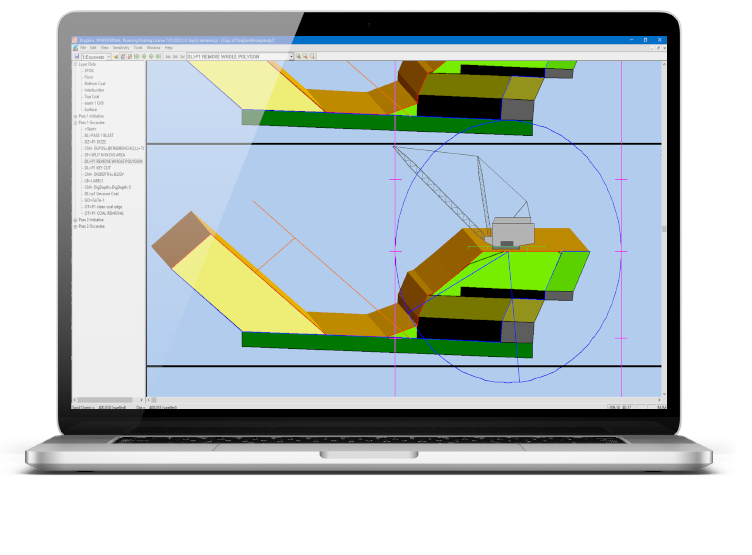
DRAGSIM is a dragline simulation system designed to optimise equipment productivity and waste movement to provide complete confidence in your decisions using the DRAGSIM decision support capability.

Method validation

By reproducing dragline methods across a range of operational parameters, and incorporating blasting, waste stripping and other mining equipment into the analysis, DRAGSIM gives users an accurate picture of dragline operations for a best-practice approach.

Evaluation of operating methods

Analyse the various segments of a cycle to identify the best and most practical method from a technical and economic perspective.

Request demo

The balance of payments is a critical component of financial programming and policies. It provides a statistical statement that summarizes a country's economic transactions with the rest of the world over a specific period. The balance of payments is used to analyze a country's external sector performance, identify potential vulnerabilities, and design policies to address balance of payments problems.

Let me know if you want me to change or modify anything.

Fiscal policy is another important aspect of financial programming and policies. It involves the use of government revenue and expenditure policies to influence the overall level of economic activity. Fiscal policy can be used to promote economic growth, reduce poverty, and improve living standards. However, it can also be used to address macroeconomic imbalances, such as inflation and balance of payments problems.

In conclusion, financial programming and policies are essential tools used by governments and international organizations to promote economic stability, growth, and development. The IMF's Financial Programming and Policies series provides a comprehensive framework for analyzing a country's economic situation, identifying policy options, and designing programs to achieve specific objectives. The second volume of the series provides a detailed analysis of the financial programming framework, including the macroeconomic framework, monetary and fiscal policy, and balance of payments analysis. By understanding these concepts and tools, policymakers can make informed decisions about resource allocation, prioritize spending, and manage risks to promote economic stability and growth.

The macroeconomic framework is a critical component of financial programming and policies. It provides a comprehensive analysis of a country's economic situation, including the major macroeconomic variables such as GDP, inflation, balance of payments, and fiscal and monetary policy indicators. The framework is based on the accounting identities of the national income and product accounts, the balance of payments, and the monetary accounts. By analyzing these variables, policymakers can identify areas of strength and weakness in the economy and design policies to address specific challenges.

Monetary policy is a critical component of financial programming and policies. It involves the use of monetary instruments, such as interest rates and reserve requirements, to influence the money supply and credit conditions in the economy. The objective of monetary policy is to promote price stability, maintain financial stability, and support economic growth. In many countries, the central bank plays a key role in implementing monetary policy, while in others, the government may have a more active role.