Downloads

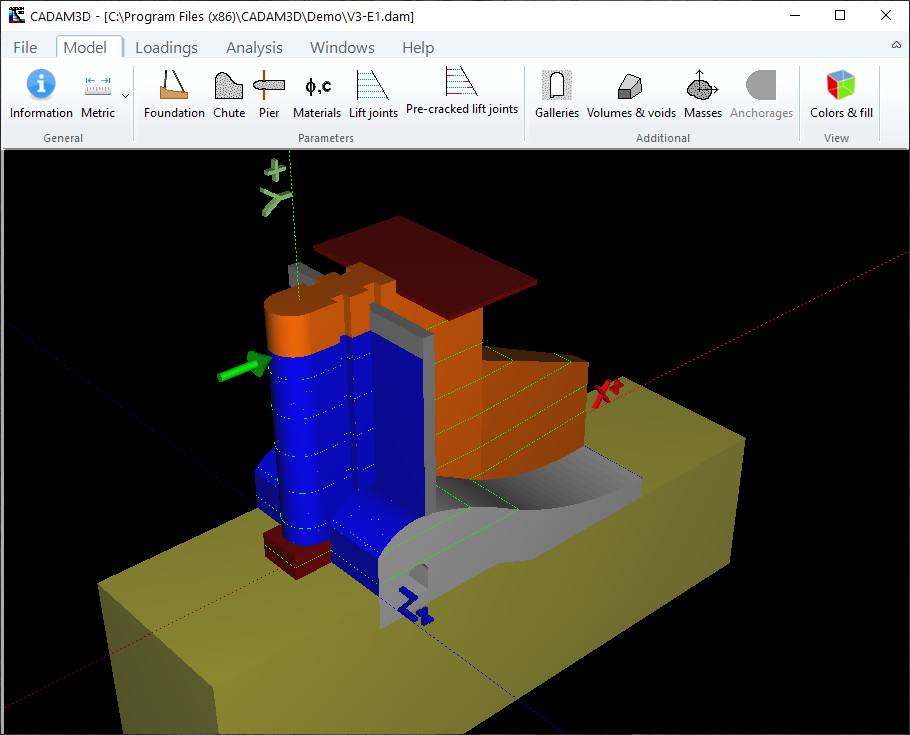
CADAM3D is a user-friendly software based on the gravity method originally developed for one of the world biggest concrete dam owner, Hydro-Quebec, and for Dams and Hydrology of the Quebec Ministry of Environment (Quebec's legislator for dam safety). CADAM3D is fully functional and is intensively used by Hydro-Quebec since 2005. To our knowledge, no other software similar to CADAM3D is available at this time.
If you perform stability analyzes of concrete hydraulic structures, this software will allow you to perform them much faster and more efficiently. If you are interested in this type of software and would like to try CADAM3D for free, please click on the button "Contact us for a free trial of CADAM3D" to send us a message.
Missax210309PennyBarberSecondChancePart reads like a file name that has slipped out of a locked drawer and found a way to tell its whole story. The string of characters suggests urgency and archive: a date stamped in digits, a handle that might be a username or codename, a name—Penny Barber—and a phrase that promises redemption: Second Chance Part. From that seed, the following short piece unfolds.
Years later, when Penny opened the file to add a new voice note—this time, a message arranged with laughter and the cadence of someone who had rebuilt trust—she found instead a different kind of record. Those who returned to her shop left more than haircuts. They left notes folded into the jar by the register: a recipe, a child’s drawing of scissors, a tiny silver charm in the shape of a comb. Each item was a line in a ledger that needed no formal tally. The second chance had become communal currency.
— End
Missax210309PennyBarberSecondChancePart matters because it anchors failure to something human: the slow arithmetic of making amends. It is not a single triumphant moment but a sequence of smaller acts—saying sorry without insisting on solace, showing up when no applause arrives, tending to the small, practical tasks that say “I am here.”
Missax—the nickname from a long-ago online handle—belonged to the life she’d tried to build afterward. It was a scroll of usernames and half-remembered screen names, a paper trail of better decisions and worse loneliness. The file named Missax210309PennyBarberSecondChancePart was a work in progress: a voice note where she practiced the words she would use when she stepped into the diner or the schoolyard, pictures of a child’s art pinned to fridges, a blurred video of her hands shaping a customer’s hair as if skill could graft back what time had pried loose. missax210309pennybarbersecondchancepart
She did not think in cinematic arcs. She thought in small reconciliations—returning a library book two weeks late, learning the name of the new mechanic, bringing the bakery across the street a dozen scones one slow afternoon. The second chance she sought was not a grand absolution but a ledger of tiny correctives. The file’s “Part” implied continuation, an awareness that atonement is a sequence rather than a point.
The second chance was not immediate. There were afternoons when rejection clunked like a door in the rain. An unanswered text. A child who flinched at first when she tried to braid hair. She learned the merciless mechanics of patience: how to let regret be a teacher rather than a master, how to let the people she’d hurt name their own timelines for forgiveness. Years later, when Penny opened the file to
March 9 had been a quiet Tuesday when everything thinned to a single line of decision. The date on the file—210309—was a bookmark for the day she’d promised herself a second chance. Not because she believed in fate but because the town had a way of naming a person by what they once were, and Penny had been labeled “the one who left” for five long years. People remembered the nail-biting evening she’d packed her daughter’s favorite sweater and driven away under a sky that looked like a bruise. They forgot the reasons: the letters unsent, the bills unpaid, the apology she’d kept rehearsing until it sounded like someone else’s voice.
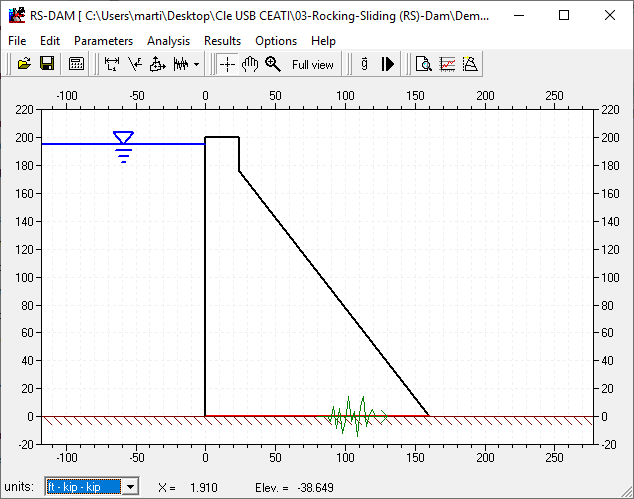
RS-DAM is a computer program that was primarily designed to provide a computational tool to evaluate the transient response of a completely cracked concrete dam section subjected to seismic loads. RS-DAM is also used to support research and development on structural behavior and safety of concrete dams.
RS-DAM is based on rigid body dynamic equilibrium. It performs a transient rocking and/or sliding analysis of a cracked dam section subjected to either base accelerations or time varying forces. Several modelling options have been included to allow users to explore the influence of parameters (e.g. geometry, additional masses, variation of the uplift force upon rotation, hydrodynamic pressures in translation (Westergaard) and rotation, center of rotation moving with sliding, coefficient of restitution of impact, etc...). RS-DAM is developed in a university context and has no commercial aspect.
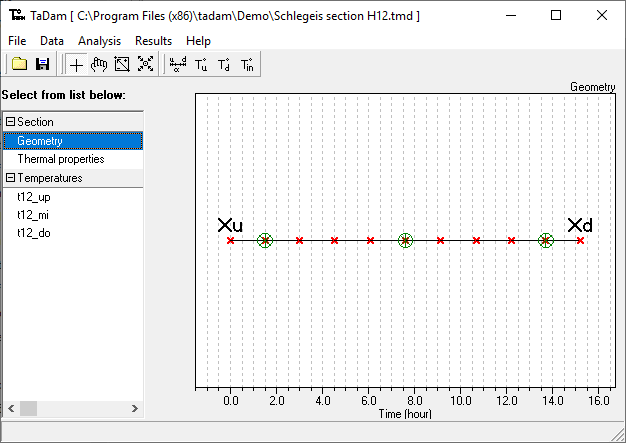
TADAM (Thermal Analysis of concrete DAMs) software employs a new frequency-domain solution technique to solve the 1D thermal transfer problem, allowing the calculation of temperature histories in a concrete dam section.
The direct solution calculates the evolution of the temperature distributions from the temperature histories of the upstream and downstream faces. The inverse solution uses temperature histories, measured inside the section, in order to calculate the temperature fields at the external faces, while taking into account the thermal wave attenuation effects and the phase angles along the section.
TADAM is developed in a university context and has no commercial aspect.