Pasec -v1.5- -star Vs — Fallout- !!top!!
Discover apps that push the boundaries of iOS.
Pasec -v1.5- -star Vs — Fallout- !!top!!
If you want, I can expand this into a short story, a concept album tracklist with descriptions, a visual moodboard brief, or a game design pitch around PASEC -v1.5-. Which would you prefer?
A nuanced take recognizes that “star” projects (space stations, universal networks, clean energy narratives) often outsource costs to people and places already in decline. The fallout is both literal and social: areas abandoned, data erased, communities repurposed. PASEC -v1.5- would thus foreground repair, equitable transition, and accountable stewardship rather than triumphant expansion. Imagine the visual identity: a UI with luminous vector glyphs overlaid on weathered titanium, soft neon gradients bleeding into corrosion maps. Sound design trades triumphant brass for synth pads that oscillate between clarity and static. Mechanical elements are modular and serviceable — screws visible, labels hand‑stamped — implying that users are also maintainers. The aesthetic choice invites participation: you read the interface but also learn to fix it. 5. Story archetypes and characters Narratively, Star champions explorers, architects, and planners; Fallout births scavengers, archivists, and repairers. PASEC -v1.5- could center on a protagonist who straddles both roles — a systems engineer turned community archivist who ferries lessons between orbital institutions and ground settlements. Their arc is not conquest but mediation: translating data ethics into practical tools for people sifting through ruins. PASEC -v1.5- -Star Vs Fallout-
Secondary characters embody frictions: the institutional visionary who still believes in grand projects; the radical who wants to burn the old systems; the practical technician who trades ideology for survival. Conflict arises less from villainy and more from epistemic gaps — who gets to define “progress” and on what ledger are debts recorded? If PASEC -v1.5- were a game or interactive experience, expect mechanics aligning with its themes: resource redistribution systems that force tradeoffs between immediate relief and long‑term infrastructure; memory reconstruction puzzles where fragments of interface code unlock histories; faction dynamics driven by storytelling (what myths persist shapes what people rebuild). Success is measured not by conquest but by resilience metrics and narrative restitution. 7. A final tension: nostalgia as tool or trap The title hints at nostalgia’s dual role. Star‑leaning nostalgia can motivate repairing a better future; Fallout‑leaning nostalgia can fossilize trauma into fetish. A mature PASEC -v1.5- resists flattening memory into aesthetic kitsch. It uses memory to inform repair, not to romanticize lost certainties. It asks: which aspects of the past deserve restoration, which must be relinquished, and who decides? Closing image Picture a maintenance bay lit by both cold star‑white LEDs and the warm amber of salvaged bulbs. An engineer reflows a circuit board bearing both a corporate stamp and hand‑etched names of those lost in the collapse. They upload the log: "v1.5 — patched, annotated, redistributed." The log doesn’t promise utopia; it promises responsibility. That is PASEC -v1.5- — less a manifesto and more an ongoing ledger of attempts to keep bright things from burning out, and to make use of the ruins to chart new constellations. If you want, I can expand this into
If you want, I can expand this into a short story, a concept album tracklist with descriptions, a visual moodboard brief, or a game design pitch around PASEC -v1.5-. Which would you prefer?
A nuanced take recognizes that “star” projects (space stations, universal networks, clean energy narratives) often outsource costs to people and places already in decline. The fallout is both literal and social: areas abandoned, data erased, communities repurposed. PASEC -v1.5- would thus foreground repair, equitable transition, and accountable stewardship rather than triumphant expansion. Imagine the visual identity: a UI with luminous vector glyphs overlaid on weathered titanium, soft neon gradients bleeding into corrosion maps. Sound design trades triumphant brass for synth pads that oscillate between clarity and static. Mechanical elements are modular and serviceable — screws visible, labels hand‑stamped — implying that users are also maintainers. The aesthetic choice invites participation: you read the interface but also learn to fix it. 5. Story archetypes and characters Narratively, Star champions explorers, architects, and planners; Fallout births scavengers, archivists, and repairers. PASEC -v1.5- could center on a protagonist who straddles both roles — a systems engineer turned community archivist who ferries lessons between orbital institutions and ground settlements. Their arc is not conquest but mediation: translating data ethics into practical tools for people sifting through ruins.
Secondary characters embody frictions: the institutional visionary who still believes in grand projects; the radical who wants to burn the old systems; the practical technician who trades ideology for survival. Conflict arises less from villainy and more from epistemic gaps — who gets to define “progress” and on what ledger are debts recorded? If PASEC -v1.5- were a game or interactive experience, expect mechanics aligning with its themes: resource redistribution systems that force tradeoffs between immediate relief and long‑term infrastructure; memory reconstruction puzzles where fragments of interface code unlock histories; faction dynamics driven by storytelling (what myths persist shapes what people rebuild). Success is measured not by conquest but by resilience metrics and narrative restitution. 7. A final tension: nostalgia as tool or trap The title hints at nostalgia’s dual role. Star‑leaning nostalgia can motivate repairing a better future; Fallout‑leaning nostalgia can fossilize trauma into fetish. A mature PASEC -v1.5- resists flattening memory into aesthetic kitsch. It uses memory to inform repair, not to romanticize lost certainties. It asks: which aspects of the past deserve restoration, which must be relinquished, and who decides? Closing image Picture a maintenance bay lit by both cold star‑white LEDs and the warm amber of salvaged bulbs. An engineer reflows a circuit board bearing both a corporate stamp and hand‑etched names of those lost in the collapse. They upload the log: "v1.5 — patched, annotated, redistributed." The log doesn’t promise utopia; it promises responsibility. That is PASEC -v1.5- — less a manifesto and more an ongoing ledger of attempts to keep bright things from burning out, and to make use of the ruins to chart new constellations.
Pasec -v1.5- -star Vs — Fallout- !!top!!
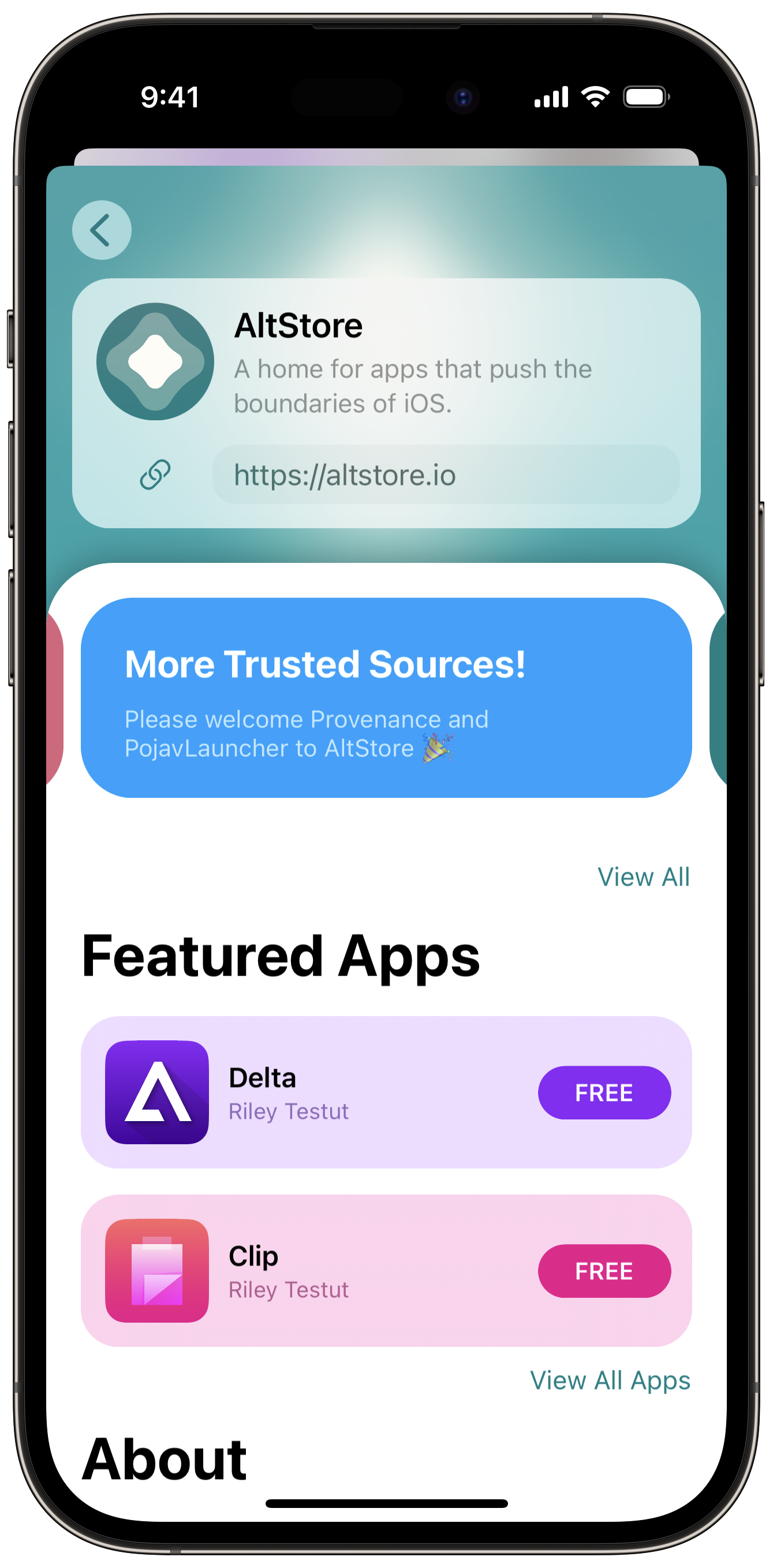
Anyone can distribute their apps with AltStore. All you need is to make a “source”, which you can do by hosting a text file with basic information about your apps. Users can then enter your source URL in AltStore and your apps will automatically appear.
Follow our complete guide to create your own source and start distributing your apps in minutes!
Publish Apps
Pasec -v1.5- -star Vs — Fallout- !!top!!
AltStore is an open-source project developed by a small, dedicated team, and you can follow along with our progress on GitHub.
We’re continuously working on new updates for our apps, and you can try out in-development features by joining our Patreon.
Join Patreon
Pasec -v1.5- -star Vs — Fallout- !!top!!
AltStore, Delta, and Clip are properties of AltStore LLC and are in no way associated with Nintendo Co., Ltd. or Apple Inc.
AltStore Classic
Requires AltServer to install. Follow our step-by-step
Install Guide
“[AltStore] is clever, has been verified by other developers, and the service has an active community of thousands of users who side-load apps on their devices. For the past few weeks, I’ve been one of them.”
Pasec -v1.5- -star Vs — Fallout- !!top!!
AltStore allows apps to exist on iOS that may not otherwise.
Apple doesn't allow all apps on their store, so AltStore gives those apps a chance.