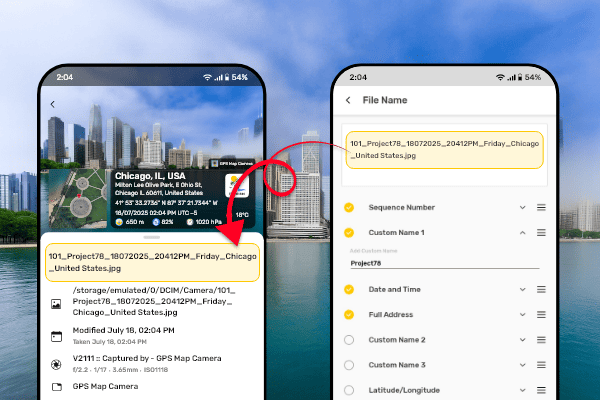
Add a text label to your work photo instantly with the GPS Map Camera.

Auto-stamp your photos & videos with accurate location, date, time, map, logo, and more. Perfect for professionals, travelers, & field teams.

Capture photos with real GPS coordinates & map overlay
Date & time stamps that can’t be edited
Add project name, notes, phone number & your brand logo
Choose automatic or manual location input for flexibility
Used by millions of real estate, construction & contractor, and remote professionals
Malayalam cinema has played a vital role in shaping Kerala's cultural identity and promoting its rich cultural heritage. The industry has explored a wide range of themes and genres, reflecting the state's cultural diversity. While facing challenges, the industry has the potential to grow and evolve, embracing new technologies and exploring new themes and genres. As Malayalam cinema continues to evolve, it is likely to remain an integral part of Kerala culture and society, showcasing the state's unique cultural practices and traditions to a wider audience.
The industry has also been influenced by Kerala's strong literary tradition, with many films adapted from literary works. For example, the film "Chemmeen" (1965) was based on a novel of the same name by Ramu Kariat, and "Nokketha Doorathu Kannum Nattu" (1952) was adapted from a play by K. T. Muhammed.
Malayalam cinema, also known as Mollywood, is a thriving film industry based in Kerala, India. The industry has a rich history spanning over a century, and its films have gained immense popularity not only in Kerala but also across India and globally. Kerala, a state in southwestern India, is known for its vibrant culture, which is reflected in its art, literature, music, and cinema. This report aims to explore the relationship between Malayalam cinema and Kerala culture, highlighting the ways in which the industry has contributed to the state's cultural identity and the impact of cultural influences on the films produced.
Kerala culture has had a profound impact on Malayalam cinema. The state's rich cultural heritage, including its literature, music, and art, has influenced the themes, narratives, and aesthetics of Malayalam films. Kerala's unique cultural practices, such as the traditional dance forms of Kathakali and Koothu, have been showcased in films like "Kudumbam" (1963) and "Aryan" (1988).
The first Malayalam film, "Balan," was released in 1938, marking the beginning of the industry. Initially, films were produced in collaboration with Tamil and Telugu industries, but over time, the industry developed its unique style and characteristics. The 1950s and 1960s are considered the golden era of Malayalam cinema, with films like "Nokketha Doorathu Kannum Nattu" (1952) and "Chemmeen" (1965) gaining critical acclaim. The industry continued to evolve, and by the 1980s, it had gained a distinct identity, with films like "Mammootty's" "Ahimsa" (1981) and "Sibi Malayil's" "Asha" (1980).



GPS Map Camera gives you full control to create photo documentation that’s authentic, accurate, and impossible to fake. Whether you’re on a site, in the field, or documenting memories, every image becomes verifiable proof
Explore All FeaturesGPS Map Camera automatically names your photos using the location, date, and time from the stamp — no manual work needed. Perfect for professionals who need clean, organized files ready for reports, sharing, or recordkeeping.
No manual renaming
Clean and easy-to-search images
Consistent formatting for reporting or sharing



See how GPS Map Camera’s powerful interface makes your images more than just pictures—each one is an authentic, accurate snapshot with automatic stamps.







We believe in transparency. Here are answers to the questions our users ask most.

Explore how people across industries use our app to get accurate, authentic photo documentation.
Super helpful for logging my location and time while working off-site. Plus the file naming is a lifesaver!

I love how my photos show exactly where and when they were taken. It makes my posts more real — and my memories more organized.

Clients trust me more when I send geo-stamped images. It’s added professionalism to my entire work process.

Exactly what I needed! Now every project photo I take includes GPS, time, and location. It’s become a daily part of my workflow.

Malayalam cinema has played a vital role in shaping Kerala's cultural identity and promoting its rich cultural heritage. The industry has explored a wide range of themes and genres, reflecting the state's cultural diversity. While facing challenges, the industry has the potential to grow and evolve, embracing new technologies and exploring new themes and genres. As Malayalam cinema continues to evolve, it is likely to remain an integral part of Kerala culture and society, showcasing the state's unique cultural practices and traditions to a wider audience.
The industry has also been influenced by Kerala's strong literary tradition, with many films adapted from literary works. For example, the film "Chemmeen" (1965) was based on a novel of the same name by Ramu Kariat, and "Nokketha Doorathu Kannum Nattu" (1952) was adapted from a play by K. T. Muhammed. xwapserieslat+mallu+bbw+model+nila+nambiar+n
Malayalam cinema, also known as Mollywood, is a thriving film industry based in Kerala, India. The industry has a rich history spanning over a century, and its films have gained immense popularity not only in Kerala but also across India and globally. Kerala, a state in southwestern India, is known for its vibrant culture, which is reflected in its art, literature, music, and cinema. This report aims to explore the relationship between Malayalam cinema and Kerala culture, highlighting the ways in which the industry has contributed to the state's cultural identity and the impact of cultural influences on the films produced. Malayalam cinema has played a vital role in
Kerala culture has had a profound impact on Malayalam cinema. The state's rich cultural heritage, including its literature, music, and art, has influenced the themes, narratives, and aesthetics of Malayalam films. Kerala's unique cultural practices, such as the traditional dance forms of Kathakali and Koothu, have been showcased in films like "Kudumbam" (1963) and "Aryan" (1988). As Malayalam cinema continues to evolve, it is
The first Malayalam film, "Balan," was released in 1938, marking the beginning of the industry. Initially, films were produced in collaboration with Tamil and Telugu industries, but over time, the industry developed its unique style and characteristics. The 1950s and 1960s are considered the golden era of Malayalam cinema, with films like "Nokketha Doorathu Kannum Nattu" (1952) and "Chemmeen" (1965) gaining critical acclaim. The industry continued to evolve, and by the 1980s, it had gained a distinct identity, with films like "Mammootty's" "Ahimsa" (1981) and "Sibi Malayil's" "Asha" (1980).